Most lives are designed to stabilize. Same city, same language, same routines, same assumptions. Same people at the same tables, doing the same things next year that they did last year, with minor edits. Stability is the default design principle of an adult life, and most of what gets called career planning or personal growth is really just a long argument for more of it.
For almost five years, I have lived without a permanent base. I move across countries, languages, time zones, and daily structures. Digital nomad is the shorthand people use. What I have actually done is run a nearly five-year experiment in what unfixed living does to the way a person thinks.
The logistics were the easy part. What surprised me was how profoundly unstable living rewired the way I think.
Three lessons became unmistakable. Taken together, they explain why living unfixed creates the posture most people spend careers trying to build by accident: adaptability without panic, learning without ego, structure without rigidity. The posture an innovator is supposed to have. The posture an operator can't work without.
§ 02 · What I Mean by Unfixed
Unfixed is not unstable. That distinction is the first thing the word has to do.
Unfixed is a posture, not a geography. The airport and the passport stamps are the visible version. The invisible version is the one that matters: a way of holding your life, your identity, and your work that assumes motion is the baseline and creates stability inside it.
Most people hear "no permanent base" and reach for words like rootless, restless, drifting, adrift. That reading misses the argument. Adrift is what happens when change arrives without design. Unfixed is what happens when change is the design.
This distinction matters because the professional implications are bigger than the lifestyle ones. You can live unfixed without leaving a single zip code. You can live fixed in the most exotic city on earth. Geography is the cheap version. The real shift is in how you hold yourself.
But don't get me wrong, living as a nomad makes unfixed easy to experience.
§ 03 · Rapid Adaptability
When nothing is automatic.
In an unfixed life, the mundane becomes deliberate.
Groceries, measurements, and labels. (Yes, I should probably just learn the metric system already.) Trash and recycling on the correct day, and in many places the correct hour. Appliances and temperatures. Have I googled how to use a particularly baffling washing machine? Yes. More than once.
Humor without shared references is its own challenge. Even when you speak the language, small choices give you away. Every Spanish-speaking country has its own rhythms for hello, goodbye, and you're welcome. You can be understood, but clearly not local. Fluency is less about grammar and more about knowing the defaults.
Money, too. Managing currencies, fees, and tips. The numbers change, but so do the social rules around them.
Nothing is assumed.
At first, this feels inefficient. Then, slowly, something recalibrates. You stop expecting comfort and start normalizing learning speed. You become faster at pattern recognition. You make decisions with incomplete information, because incomplete information is the only kind you ever have. You adjust without emotional drag. Instead of waiting for clarity, you move with curiosity.
This is the first rewiring: the nervous system learns to read mild disorientation as the signal to pay closer attention.
§ 04 · Being Okay with Being Wrong
Re-entering a constant learning state.
Most adults quietly optimize their lives to avoid being wrong. They specialize. They choose environments where they know the rules. They stay inside systems that protect their competence. A decade into any career, most of the energy is going into managing one thing: how rarely the person has to be visibly, publicly, uncomfortably incorrect.
Learning a new language removes that protection. You are wrong constantly. Audibly, publicly, and without control. You misuse words, misunderstand tone, miss nuance. There is no way to avoid this, especially if you learn through immersion experiences.
At first, this feels destabilizing. Then something shifts. You re-enter a state most adults rarely practice: continuous learning without ego defense.
It lowers the emotional cost of mistakes and accelerates feedback, adjustment, and progress. You stop equating being wrong with being diminished. You do not adapt because you know more. You adapt because you are willing to update more often.
That willingness is the core of adaptability. And it gets harder to access the longer you have been professionally competent, which is why most executives are slower learners than the entry level workers on their teams. Competence protected is competence that stops compounding.
Innovation depends on this posture. It means testing ideas before they are finished, speaking before fluency and adjusting in motion. The organizations that ship the fastest are the ones where being wrong is the cheapest. The same is true for people.
§ 05 · Fluid Routines
Stability as a skill, not a place.
Time zones shift. Workspaces change. Energy rhythms reset. In an unfixed life, routines do not disappear. They liquefy.
You stop anchoring productivity to a specific desk, a specific hour, a specific environment. Instead, you build portable systems. Mental warm-ups instead of locations. Rituals instead of schedules. Principles instead of habits. The ability to enter a working state on demand, in whatever environment is available today, because today is always a different environment.
This is normalization under flux. The ability to create order inside movement.
And that is transformation at its core: preserving function while form keeps changing.
Most people build the reverse. They pin function to form so tightly that the function dies when the form does. They needed the home office to do deep work, the morning routine to think clearly, the commute to separate roles. When the form goes, so does the function, because they never learned to carry function without it.
§ 06 · Why This Matters Now
The world most adults were trained for assumed a stability the next decade will not provide.
Company tenures have been getting shorter. Tool stacks change every eighteen months. Job categories that paid well five years ago are evaporating. AI is compressing every professional timeline, and the people who thrive inside that compression are the ones who treat learning as a core skill instead of an interruption.
The fixed career, company, location, skill set and professional identity are all getting riskier and less reliable. The operating model most people were trained on assumes a stability the next era cannot deliver, and the response most people have is to clutch harder rather than redesign.
Unfixed is the redesign.
It is not a lifestyle brand, and it is not a celebration of chaos. It is a thesis about what the next operating model requires, at the individual level and at the organizational level: adaptability as a baseline, learning without ego as a daily practice, portable systems instead of fixed environments. The posture comes before the tools. The posture is the precondition for any of it working.
The way I work and live has transformed, and the speed and quality of my work have advanced with it.
§ 07 · The Operator Translation
What this looks like inside work.
The unfixed operator does not protect their competence. They publish their learning. They update in public. They let new tools reshape how they do their job, rather than treating every shift as a threat to their expertise.
The unfixed operator designs portable systems. They know how to do their best work in a different country, a different company, a different tool stack, because the work lives in the thinking.
The unfixed operator carries their operating model across contexts. Same patterns, different surface. Same thinking, different artifact. The work travels because the person is the system.
And the unfixed operator runs fast because they have already eliminated the drag most professionals carry: the drag of needing to be right, the drag of needing the environment to be familiar before they'll start, the drag of recovering from every small change.
You recognize these people when you work with them. They move, update and build fast. They are rare now and will be less rare as the next decade does what it is already doing.
§ 08 · The Synthesis
Together, these traits create something rare. Adaptability without panic. Learning without ego. Structure without rigidity.
You stop asking, "How do I make this stable?" You start asking, "How do I work with what is here?"
That question leads to better problem-solving, faster iteration, and a deeper trust in your ability to navigate unknown terrain. You do not need certainty to move. You trust your capacity to adjust once you do.
Unfixed is the posture. Movement without panic is the output. A life, and a career, that can evolve without breaking every time the environment changes.
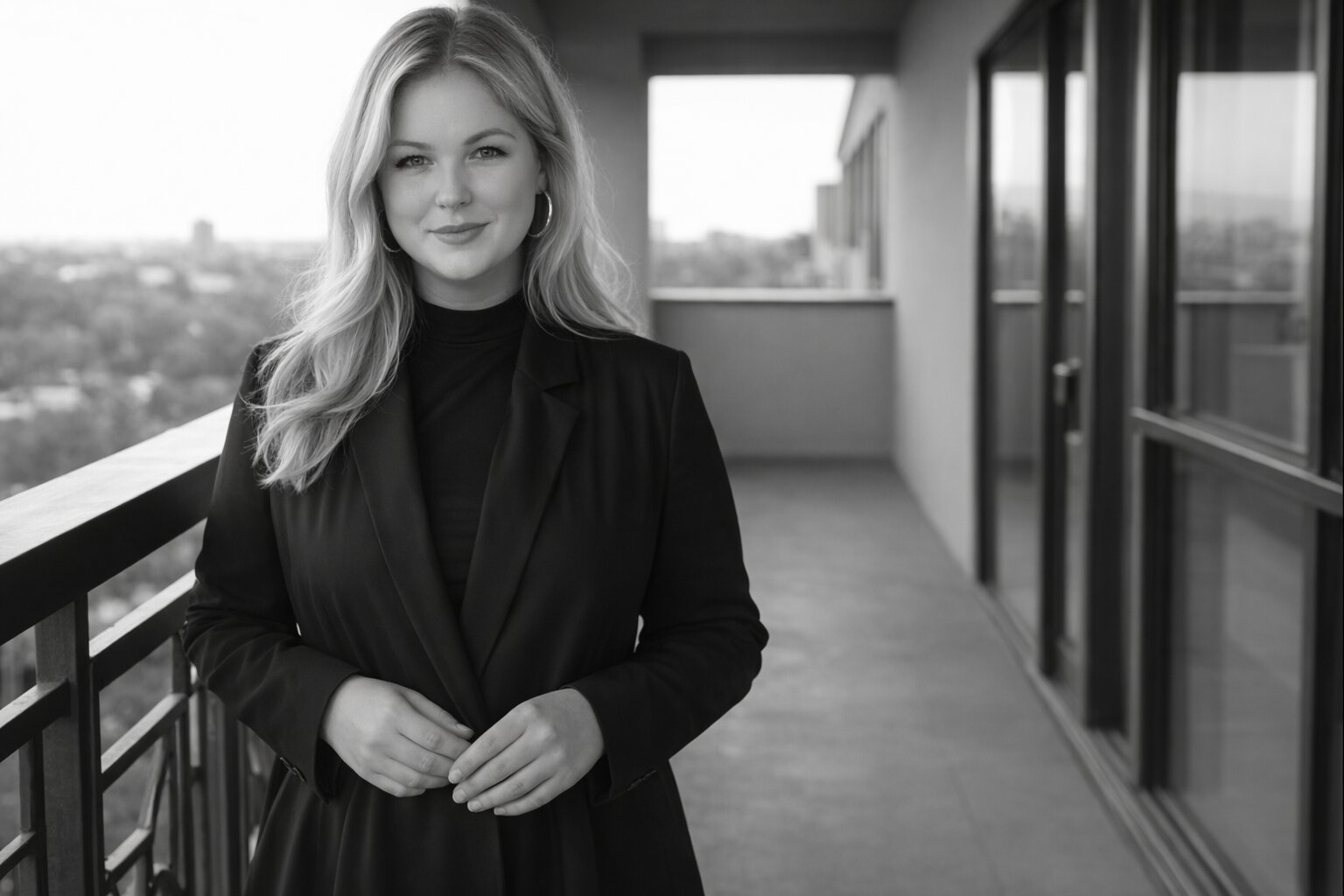
Nicole is an operator with 20-plus years of receipts in marketing, product, and design. She builds AI-native systems for healthcare, SaaS, and emerging tech. She founded and leads Awestruck Labs. She spends a lot of time traveling the world these days.